Welcome to Our Website
-
WhatsApp:+ 86 19113553803
-
Email:sales@zhcoutdoor.com

How to clean retractable awning fabric without removing
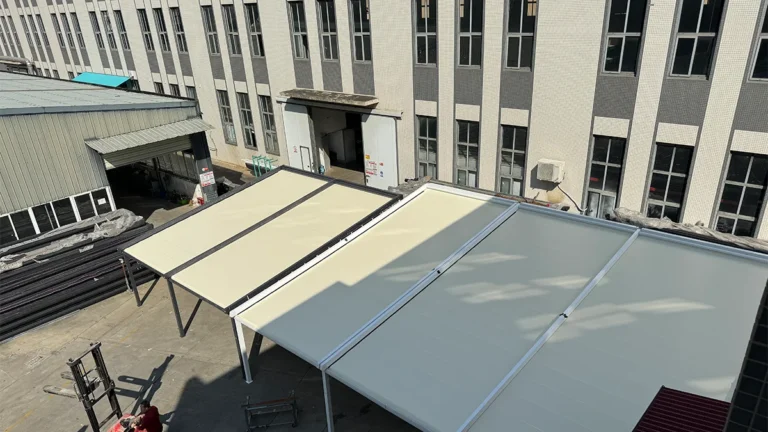
Keeping your retractable awning fabric clean does not usually require taking the fabric off the awning frame. With care you can clean most retractable awning fabrics while they stay in place helping keep their look, water resistance and useful life.
For acrylic and outdoor awning fabrics manufacturers suggest removing loose dirt first then cleaning with clean water and a mild soap mix. The fabric should then be completely. Allowed to dry before folding the awning back in.
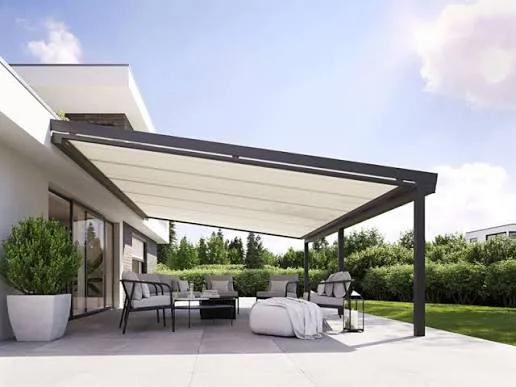
Can You Clean a Retractable Awning Without Taking Off the Fabric?
Yes.
In cases the fabric can be cleaned while it is fully stretched out. You do not need to take the awning or remove the fabric from the roller tube.
This is one of the advantages of an awning: regular cleaning and care can usually be done while the system stays in place.
However always check the fabric makers instructions first because acrylic, polyester, PVC-coated and layered fabrics may need cleaning methods.
What You Need
- For cleaning you usually only need:
- A garden hose
- A soft-bristle brush
- A bucket
- Lukewarm water:Mild soap or a fabric-safe awning cleaner
- A soft cloth:A telescopic cleaning pole for high areas
Avoid using pressure washing unless the fabric maker allows it.
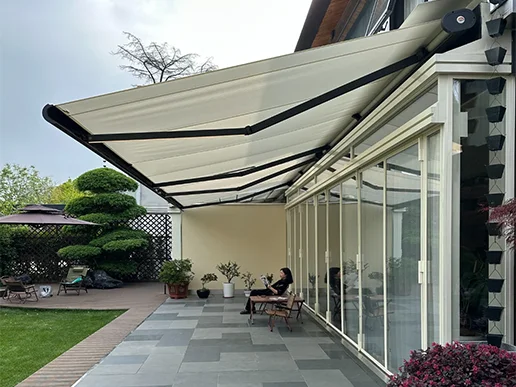
Step-by-Step: How to Clean an Awning Without Removing It
Step 1: Fully Extend the Awning
Open the awning completely so the whole fabric surface is easy to reach.
Choose an moderately warm day without strong wind. Avoid cleaning the fabric when it’s very hot because cleaning solution can dry too fast and leave marks.
Step 2: Remove Loose Dirt
Before adding water brush away:
- Dust
- Leaves
- Pollen
- Small branches
- Bird waste
- Surface dirt
For larger awnings a telescopic soft-bristle brush makes the job easier.
Removing dirt first stops it from turning into mud when washing.
Step 3: Rinse the Fabric
Use a garden hose to wet the fabric completely.
Start from the top. Work down so that dirt moves toward the bottom edge.
Do not use much water pressure.
Step 4: Apply Mild Soap
Mix water with a small amount of mild soap.
Apply the mixture evenly to the fabric. Gently brush the surface.
Do not scrub the fabric hard. Much force can damage the fabric finish, seams or water-repellent coating.
For solution-dyed acrylic fabrics makers often suggest soap and lukewarm water instead of strong detergents.
Step 5: Treat Tough Stains
For dirt, bird droppings, pollen or specific stains:
- Wet the area.
- Apply a cleaning solution.
- Let it sit for a time.
- Gently brush the area.
- Rinse well.
Do not use chemicals right away.
Some fabric makers allow bleach solutions for very tough stains but bleach can harm sewing threads and may reduce water repellency. So it should only be used if the fabric maker says it is okay.
Step 6: Rinse Well
This step is very important.
Rinse the awning until there is no visible soap left.
Soap left on the fabric can attract dirt and may affect the fabrics protective coating.
Step 7: Let the Fabric Dry Completely
Keep the awning extended until it is completely dry.
Do not roll up an awning and leave it closed.
Although many outdoor fabrics resist mildew, dirt and organic material trapped in a rolled-up awning can cause mildew. Makers specifically say to open the awning as soon as possible if it has been rolled up while wet.
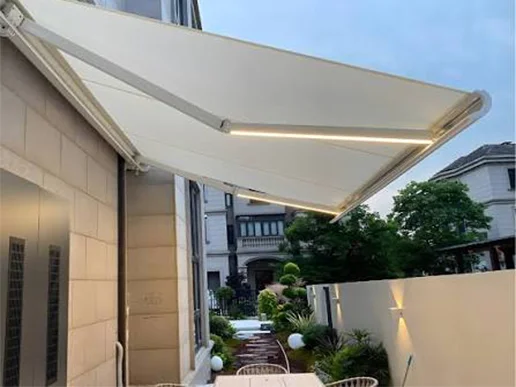
How Often Should You Clean a Retractable Awning?
A good maintenance plan is:
| Environment | Recommended Cleaning |
| Normal residential area | Every 6 months |
| Dusty or polluted area | Every 3–4 months |
| High pollen area | Every 3–4 months |
| Near the ocean/coastal area | Every 1–3 months |
| Heavy rain / trees / birds | Inspect monthly |
| Before and after long-term storage | Clean and dry |
Regular cleaning helps stop dirt, pollen and organic material from building up and sticking to the fabric.
For setups exposed to salt spray more frequent fresh water washing may be needed.
How Much Does Awning Cleaning Cost?
The cost mainly depends on awning size, access, location and how dirty it is.
Typical service prices vary a lot by area:
| Service | Typical Reference Range |
| Small residential awning | US$50–100 |
| Medium awning | US$80–180 |
| Large awning | US$120–300+ |
| Professional deep cleaning | US$150–400+ |
| DIY cleaning | About US$10–40 for basic supplies |
These are general market reference ranges, not fixed prices. Local labor costs and the condition of the awning can change the price.
For a clean awning DIY cleaning is usually the cheapest choice.
How Long Does Retractable Awning Fabric Last?
The life depends on:
- Fabric type
- Sun exposure
- Climate
- Wind exposure
- Cleaning and care
- Installation quality
- How often it is retracted
- Whether the awning is exposed to snow, heavy rain or strong wind
As an industry reference some makers say that properly cared for awning fabrics can last about 8–10 years while premium solution-dyed acrylic fabrics can have maker warranties. SunSetter for example says about 8–10 years of service with proper care and maintenance.
Premium solution-dyed acrylic fabrics may also have fabric warranties; Sunesta for example offers a limited 10-year warranty for certain acrylic fabrics against mildew rot and fading.
For a factory quote however the actual expected life should always be given based on the fabric chosen and the environment not on one number.
How Much Wind Can a Retractable Awning Handle?
There is no wind rating for every retractable awning.
Wind resistance depends on:
- Awning width
- Projection
- Arm structure
- Mounting method
- Wall construction
- Number of brackets
- Fabric type
- Installation quality
- Wind direction
- wind conditions
Some retractable awnings have been tested at wind gusts of about 55–75 mph (89–121 km/h) but makers still advise taking in the awning when strong or gusty winds come.
Important:
Do not think a lab test value means it is safe to use.
For safety take in the awning before winds, storms or bad weather arrive.
For B2B projects always ask the maker for the tested wind-load details for the exact awning model, size and setup.
What Should You Never Use to Clean Awning Fabric?
Avoid the following unless the fabric maker allows it:
- industrial soaps
- Caustic cleaners
- Solvents
- Abrasive cleaners
- Hard wire brushes
- Aggressive pressure washing
- Unapproved bleach
- Strong degreasers
Some makers specifically warn against caustic cleaners while others say only mild soap and water are needed for regular cleaning.
Can You Pressure Wash an Awning?
Generally do not use a high-pressure washer on awning fabric unless the fabric maker allows it.
High-pressure water can:
Harm the fabric surface
Affect water-repellent coatings
Damage seams
Push water into seams
Harm the awning system
Cause wear
A normal garden hose and soft brush are usually safer.
What If the Awning Gets Wet?
Light rain is usually not a problem for outdoor awning fabrics.
However avoid letting water collect on the fabric.
If the awning is put away while wet:
Open it again soon as the weather allows and let it dry completely.
This lowers the chance of mildew and bad smells.
How to Make Your Awning Fabric Last Longer
1.Clean often
Do not wait until dirt is deep in the fabric.
2.Keep the fabric dry
Whenever possible let it dry completely before folding it back.
3.Take in during weather
Strong wind, storms, heavy rain and snow can put a lot of stress on the awning structure.
4.Do not let water sit
Adjust the slope properly and take in the awning during rain.
5.Check the fabric
Look for:
- Rips
- Loose stitching
- Fraying
- Mold
- Color changes
- Water leaks
- issues
6.Check the frame
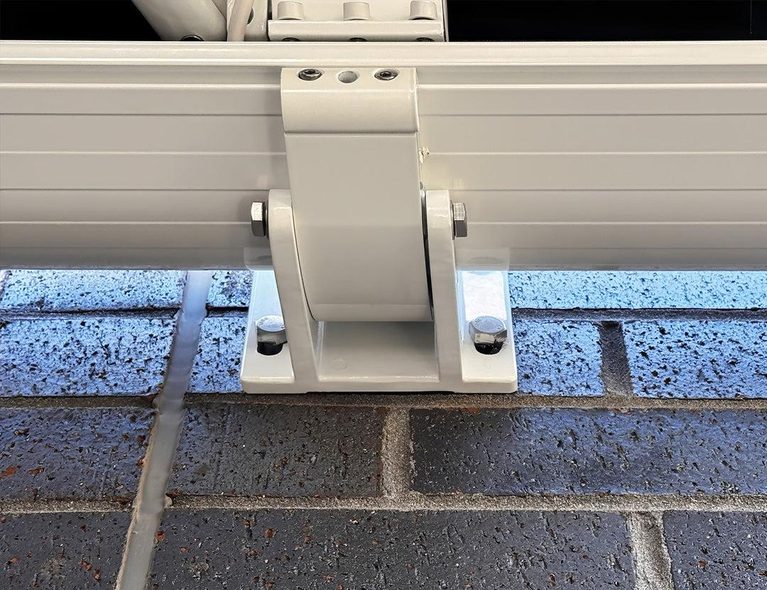
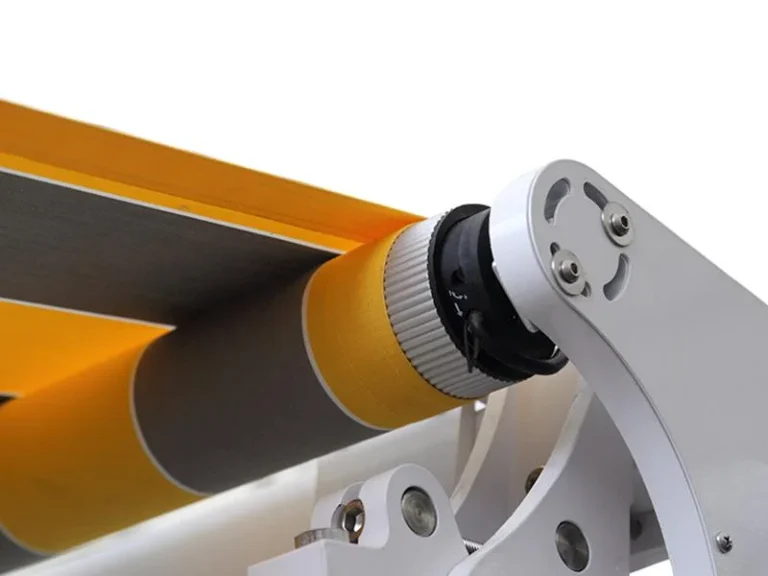
Look at the arms, brackets, roller tube and where it is attached regularly.
7.Oil moving parts when needed
Some awning makers suggest oiling some moving parts. Follow the care instructions, for the model you have.